
แว่นตาเลนส์โปรเกรสซีฟ หลาย ๆ คนอาจจะคิดว่า ไม่ว่าจะตัดร้านไหนก็เหมือนกัน แต่ต้องขอบอกเลยว่า ไม่ใช่อย่างแน่นอน เพราะมีลูกค้าหลายท่านที่เคยประสบปัญหา ตัดแว่นโปรเกรสซีฟเทคโนโลยีอื่นมาแล้วใส่ไม่ได้ ต้องปรับตัวเข้าหาแว่นอยู่ตลอดเวลา จนทำให้เกิดอาการสายตาล้า ปวดกระบอกตา หรือถึงขั้นปวดศีรษะ
อยากรู้ว่าแว่นตาโปรเกรสซีฟที่มีคุณภาพเป็นอย่างไร คลิก !!

แว่นสายตาที่ถูกพัฒนา และคิดค้นวิธีการตัดใหม่ๆ จากปรมาจารย์โบบิมามากกว่า 10 ปี ทำให้ได้แว่นสายตาที่ให้คุณภาพการมองเห็นชัดทุกระยะ ใส่สบาย และรู้สึกเป็นธรรมชาติ เหมือนได้กลับไปเป็นหนุ่มสาวอีกครั้ง และด้วยมาตรฐานคุณภาพเลนส์ ที่สามารถแก้ไขปัญหาสายตาได้อย่างครบวงจร
แว่นโปรเกรสซีฟ ISOPTIK ไม่เหมือนแว่นตาทั่วไปอย่างไร อยากรู้อ่านต่อในบทความนี้เลย

การทำแว่นตาเลนส์โปรเกรสซีฟ จะเริ่มตั้งแต่การวิเคราะห์พฤติกรรมการใช้สายตาจริง งานอดิเรก และการทำงานในชีวิตประจำวัน ของลูกค้าอย่างเฉพาะเจาะจง และคำนวณองศาการมองเห็น 3 ระยะ ทั้งระยะไกล กลาง และใกล้ โดยรายละเอียดเหล่านี้จะถูกนำมาคำนวณ ในการออกแบบโครงสร้างเลนส์แว่นตาโปรเกรสซีฟ อัจฉริยะไอซอพติก 3 มิติ เฉพาะบุคคล
หากสนใจแว่นตาโปรเกรสซีฟอัจฉริยะสามมิติ เฉพาะบุคคลอย่างยิ่งยวด คลิกที่นี่
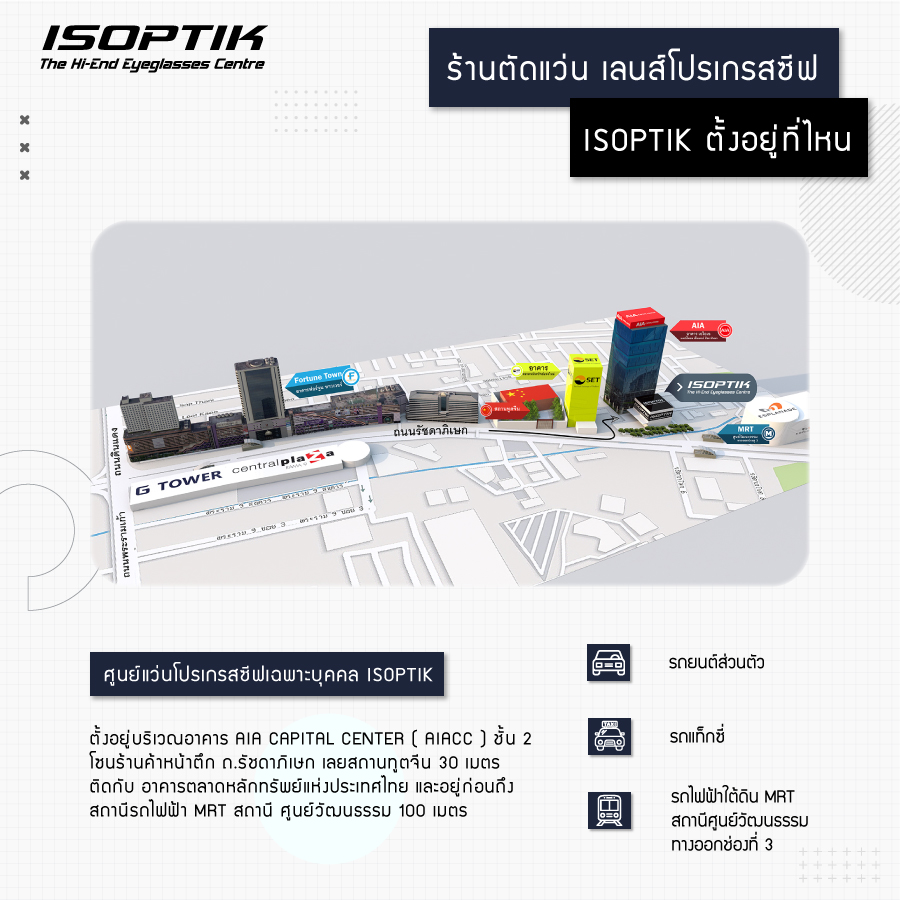
ศูนย์แว่นโปรเกรสซีฟเฉพาะบุคคล ISOPTIK จะตั้งอยู่บริเวณอาคาร AIA CAPITAL CENTER ( AIACC ) ชั้น 2 โซนร้านค้าหน้าตึก ถ.รัชดาภิเษก เลยสถานทูตจีน 30 เมตร ติดกับ อาคารตลาดหลักทรัพย์แห่งประเทศไทย และอยู่ก่อนถึงสถานีรถไฟฟ้า MRT สถานี ศูนย์วัฒนธรรม 100 เมตร
หากลูกค้าท่านใด ที่ต้องการนัดคิวทดลองเลนส์ล่วงหน้า ก็สามารถติดต่อ สอบถามรายละเอียดเพิ่มเติม ที่ช่องทางตาม บทความนี้ได้เลย
ความพิเศษของ ร้านตัดแว่น เลนส์โปรเกรสซีฟ ISOPTIK
ร้านตัดแว่น เลนส์โปรเกรสซีฟ ISOPTIK เราเน้นการตัดแว่นโปรเกรสซีฟ เฉพาะบุคคลที่มีคุณภาพสูงสุด ด้วยทีมงานที่มีความเชี่ยวชาญ และมากประสบการณ์ในทุกขั้นตอน ไม่ว่าจะเป็น นักทัศนมาตร จักษุแพทย์ และมีปรมาจารย์โบบิ ซึ่งเป็นผู้ออกแบบโครงสร้างเลนส์โดยเฉพาะ เพื่อก้าวกระโดดแห่งการมองเห็น สู่คุณภาพชีวิตที่ดีกว่า
- แว่นตาโปรเกรสซีฟ อัจฉริยะ ISOPTIK รับประกันความพึงพอใจในการใช้งานจริง สูงสุด 6 เดือน
- ราคาเลนส์โปรเกรสซีฟอัจฉริยะไอซอพติก 3 มิติ เฉพาะบุคคลอย่างยิ่งยวด เริ่มต้นคู่ละ 33,800 บาท
- สำหรับลูกค้าที่มีงบประมาณจำกัด ไอซอพติก ก็มีเลนส์โปรเกรสซีฟอัจฉริยะ รุ่นประหยัด ราคาเริ่มต้นคู่ละ 18,800 บาท
ท่านที่ต้องการทราบว่า แว่นตาโปรเกรสซีฟ อัจฉริยะ ไอซอพติก 3 มิติ เฉพาะบุคคลอย่างยิ่งยวด เพิ่มขีดความสามารถ การทำงานของสมองได้อย่างก้าวกระโดดอย่างไร สามารถทำการนัด เข้ามาทดลองเลนส์ ด้วยตัวเอง ได้ที่
ศูนย์เเว่นโปรเกรสซีฟเฉพาะบุคคล ไอซอพติก ( ISOPTIK )
สอบถามรายละเอียดเพิ่มเติมได้ที่ :
ปรมาจารย์โบบิ สายด่วน : 097-454-9944
LINE ID : @isoptik
เว็บไซต์ : https://www.isoptik.com
whatsapp : +66 97 454 9944
อีเมล : isoptik@gmail.com
เลนส์ Progressive อัจฉริยะไอซอพติก 3 มิติ เฉพาะบุคคลอย่างยิ่งยวด ดีอย่างไร ?
อ่านต่อ คลิก : https://www.isoptik.com/th/p/5057
คำยืนยันจากผู้ใช้ แว่นตาโปรเกรสซีฟ อัจฉริยะไอซอพติก มากกว่า 200 ท่าน
อ่านต่อ คลิก : https://www.isoptik.com/th/testimonial/
อัปเดตโปรโมชั่นก่อนใครได้ที่ : https://www.isoptik.com/th/list/supersell
กูเกิ้ลแมพ นำทางมา ศูนย์แว่นตาไอซอพติก
https://maps.app.goo.gl/6PCmYMkQ9k94spgU9
ดูการเดินทางอย่างละเอียด คลิก : https://www.isoptik.com/th/maps/
ศูนย์ แว่นตาโปรเกรสซีฟ เฉพาะบุคคล ไอซอพติก ( ISOPTIK )
89 อาคารเอไอเอ แคปปิตอล เซ็นเตอร์ ชั้น 2 ห้อง 208
ถ. รัชดาภิเษก แขวงดินแดง เขตดินแดง กรุงเทพฯ 10400
เปิดวันพุธ – วันอาทิตย์ เวลา 10:00 – 19:00 น.
หยุดทุกวันจันทร์ , อังคาร